 Physics
📄 اطبع pdf
00971504825082
سلوك الموجات
wave behavior
الموجات عند الحدود
انعكاس - تداخل - انكسار - موجات مستقرة
للاستفسار: 00971504825082
الموجات عند الحدود
عندما تصل الموجة إلى حد، وهي نقطة يتغير فيها الوسط، أي عندما تنتقل إلى وسط آخر، تحدث ثلاثة أشياء. ينتقل جزء من الموجة إلى الوسط الجديد، وينعكس بعض الموجة مرة أخرى إلى الوسط الأصلي، ويتم امتصاص بعض من طاقة الموجة.
عندما يكون الوسط الجديد أعلى كثافة تنقلب الموجة في الارتداد (حاجز ثابت) وعندما يكون أقل كثافة ترتد بنفس الاتجاه (حاجز متحرك).


تُظهر الرسوم المتحركة أعلاه نبض الموجة بالكامل الذي ينعكس مرة أخرى في الوسط الأصلي.
في الواقع، سيتم نقل بعض طاقة نبض الموجة إلى الوسط الجديد.
وسيكون للنبضة المنعكسة سعة أصغر (طاقة أقل) من النبضة الأصلية.
لاحظ أيضًا أن سرعة نبضة الموجة المنعكسة هي نفسها سرعة نبضة الموجة الساقطة.
تعتمد السرعة على الوسيط، والنبضة المنعكسة لا تزال في الوسط الأصلي.
لذلك لها نفس سرعة النبض الساقط.
استخدم المحاكاة أدناه لاستكشاف والتفكير بمزيد من التفصيل.
يسمح لك بمعرفة كيف يتحد النبض الوارد والنبض المنعكس لتشكيل النبض الفعلي المرئي على الخيط.
التداخل البناء والهدام
عندما تتداخل موجتان أو أكثر في نفس الوسط في نفس الوقت، يشار إليها باسم تداخل الأمواج.
من الأسهل فهم عملية التداخل من خلال مراقبة نبضات الموجة المتداخلة.
استخدم المحاكاة أدناه لاستكشاف تداخل نبضات الموجة.
تجربة موجات مختلفة العرض والارتفاعات، بما في ذلك نبضات ارتفاع سالب تتداخل مع نبضات ارتفاع موجب.
لاحظ أن نبضات الموجة لا ترتد عن بعضها البعض.
وبدلاً من ذلك، فإنها تمر مباشرة عبر بعضها البعض وتتابع طريقها وكأن شيء لم يحدث ويعرف هذا (مبدأ الاستقلالية).
ويظهر التأثير فقط عندما تتداخل. عندما يتداخل النبضان، تكون الموجة الناتجة هي المجموع الجبري للنبضين.
يُعرف هذا بمبدأ (التراكب). يمكن تحديد مبدأ التراكب على النحو التالي: إزاحة الوسط من موضع التوازن عندما تتداخل موجات متعددة يساوي المجموع الجبري لحالات نزوح الموجات الفردية.
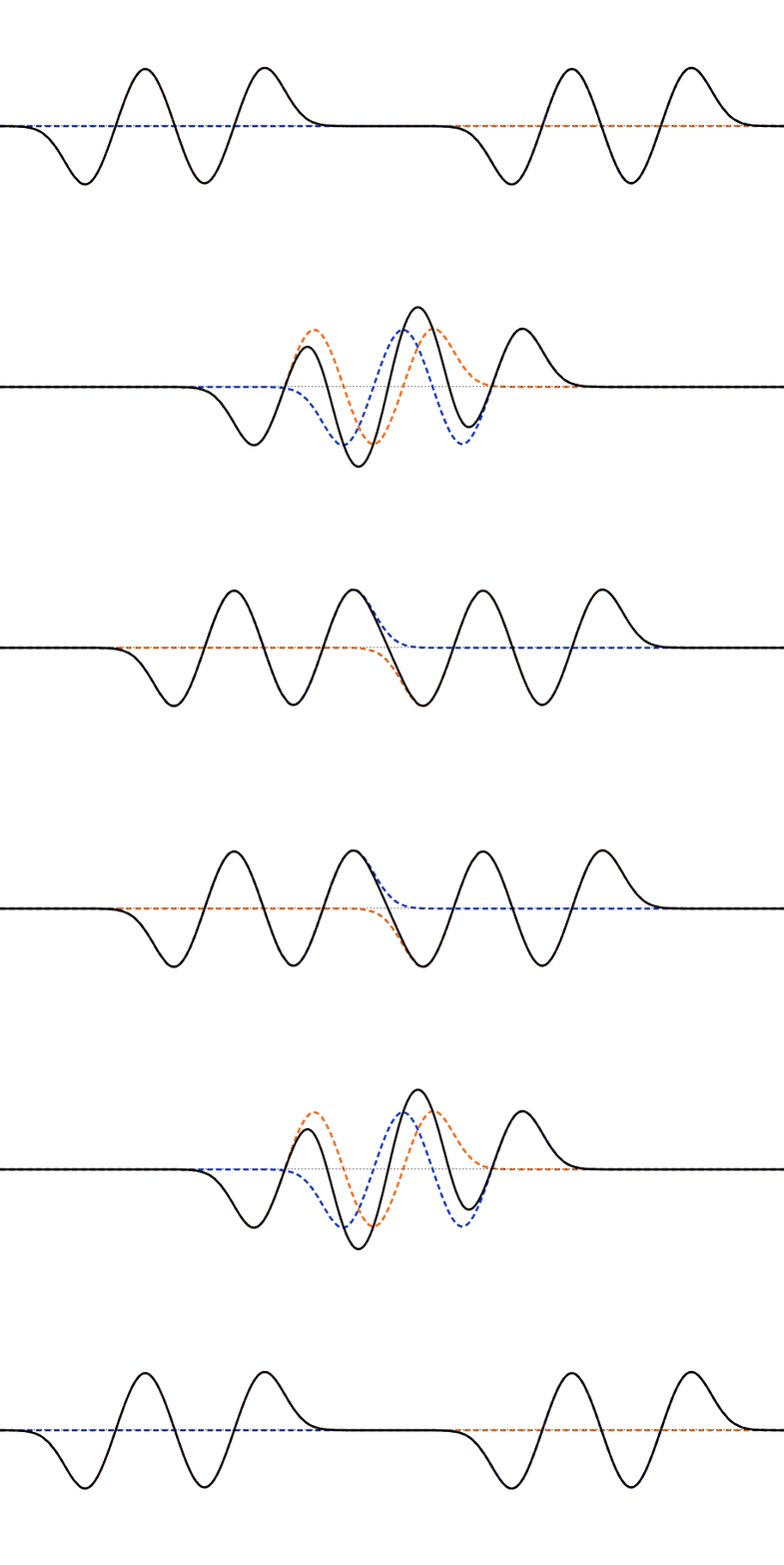
تداخل النبضات المتعددة
عندما تتداخل نبضات متعددة، يتم تطبيق مبدأ التراكب ومبدأ الاستقلالية.
تُظهر الخطوط المنقطة الملونة في الرسوم المتحركة الشكل الأصلي للنبضات.
بينما يُظهر الخط الأسود المظهر الفعلي الذي نراه، وهو مجموع النبضات الأصلية.
يمكن أن تظهر العديد من أنماط التراكب المختلفة عندما تتداخل موجتان. هذه بعض الأمثلة.
في المحاكاة أعلاه، تتحرك الأمواج الزرقاء والحمراء في نفس الاتجاه في نفس الوسط (وبالتالي لها نفس السرعة).
تظهر الموجة الأرجواني في الأسفل مجموع الموجات الزرقاء والحمراء.
استخدم مربع الاختيار لرؤية الموجات الحمراء والزرقاء متراكبة فوق بعضها البعض.
استخدم زر التشغيل في الزاوية اليسرى السفلية لتشغيل الرسوم المتحركة. افتراضيًا يكون للموجات الحمراء والزرقاء نفس الطول الموجي وهما "متفقان في الطور".
عندما تكون الموجات المستعرضة في الطور، فإنها تتطابق مع قمة إلى قمة.
مجموع الموجتين له ضعف سعة أي من الموجتين الأصليتين. وهذا ما يسمى التداخل البناء.
استخدم شريط التمرير لتغيير مرحلة الموجة الزرقاء. شاهد كيف يصبح مجموعهم أصغر مع اختلاف في الطور. ومن الممكن، يحدث التداخل الهدام، وتلغي الموجتان تمامًا.
الآن قم بتعيين الطولين الموجيين على قيم مختلفة جدًا.
على سبيل المثال جرب 1.5 لأحدهما و 2.5 للأخر. يظهر مجموعهم الآن إلى جانب كل من الموجات الفردية.
يمكن أن يؤدي إلى إنشاء مجموعات موجات معقدة للغاية.
عندما تتحرك موجتان في نفس الوسط ولكن في اتجاهين متعاكسين، تتشكل أنماط تداخل مختلفة. إذا كانت الموجتان المتحركتان في اتجاهين متعاكسين لهما نفس الطول الموجي، فإن نمط التداخل المعروف باسم الموجة الواقفة.
في نسخة المحاكاة الموضحة أعلاه، تتحرك الأمواج الحمراء والزرقاء في نفس الوسط ولكن في اتجاهين متعاكسين. عندما يكون للموجتين أطوال موجية مختلفة فإن مجموعهما يكون موجة متنقلة معقدة.
الآن قم بتعيين كلا الطولين الموجيين على نفس القيمة (يمكن القيام بذلك أيضًا بالنقر فوق الزر إظهار الموجة الواقفة).
مجموعهم هو نوع خاص من تداخل الموجة يُعرف باسم الموجة الواقفة. وتسمى الموجة الواقفة لأنها لا تتحرك في اتجاه أي من الموجتين.
بعض النقاط في الموجة الواقفة لا تتحرك على الإطلاق، وتسمى هذه النقاط العقد.
تسمى النقاط الموجودة على الموجة الواقفة والتي تمر بأكبر قدر من الإزاحة البطون.
استخدم مربع الاختيار لمراقبة العقد والبطون.
الموجات المستقرة
عندما تتشكل موجة واقفة على حبل، هناك دائمًا عقدة في كل طرف. يُعرف هذا أيضًا باسم التوافقي الأول.
التوافقي الأول: يكون طول السلسلة مساويًا لنصف الطول الموجي للموجة الواقفة.
لأن المسافة من عقدة إلى أقرب عقدة تالية هي نصف طول موجي. تردد أول موقوفة يسمى التردد الأساسي.
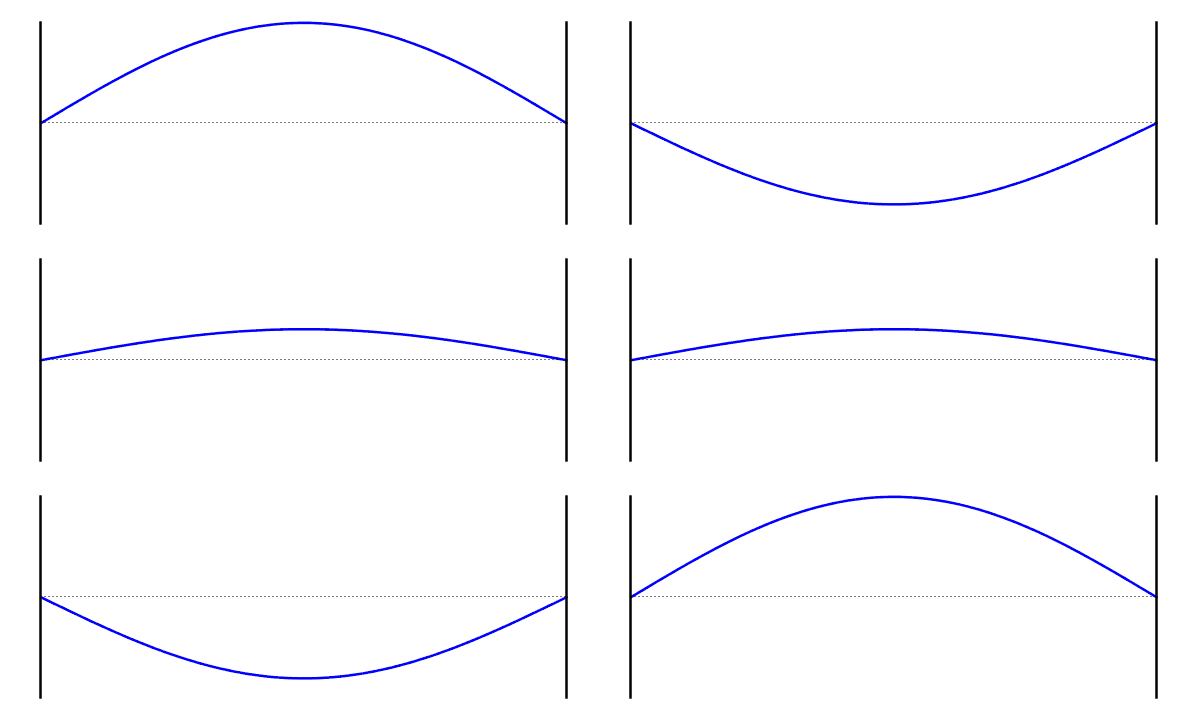
التردد الأساسي (الموجة الواقفة الأولى)
\[f = f_0 \quad L = \frac{\lambda}{2} \quad \lambda = 2L\]
هناك العديد من أوضاع الاهتزاز الأخرى لسلسلة مثبتة في كل طرف. كل وضع يسمى متوافقة.
عند التوافقي الثاني، تتكون الموجة الواقفة من جزأين. الطول الموجي هو نصف الطول الموجي الأساسي، وبالتالي فإن التردد هو ضعف التردد الموجي الأساسي.

الموجة التوافقية الثانية
\[f = 2f_0 \quad L = \lambda \quad \lambda = L\]
عند التوافقية الثالثة، تتكون الموجة الواقفة من ثلاثة أجزاء. الطول الموجي يساوي ثلث الطول الموجي الأساسي، وبالتالي فإن التردد يساوي ثلاثة أضعاف التردد الموجي الأساسي.

الموجة التوافقية الثالثة
\[f = 3f_0 \quad L = \frac{3\lambda}{2} \quad \lambda = \frac{2L}{3}\]
موجات تنتقل في بعدين
فكر في حصاة سقطت في بركة. يتم دفع الماء للأسفل ثم يرتد لأعلى.
يتسبب هذا في إشعاع دوائر متحدة المركز إلى الخارج، كما هو موضح في هذا الرسم. تتشكل الحلقات مع ارتفاع منسوب المياه وانخفاضه.

الخطوط البيضاء تدعى مقدمة الموجة والسوداء تمثل القاع. كل حلقة عبارة عن مجموعة من النقاط يصلها الإهتزاز بنفس الفترة الزمنية.
نسمي المسافة بين مقدمة موجة ومقدمة الموجة التي تليها بطول الموجة.
أو المسافة بين قاعين متتاليين بطول الموجة.
تنتشر الموجة في جميع الإتجاهات وإتجاه انتشار الموجة دوماً عمودي على مقدمة الموجة.
انعكاس الموجات في بعدين
عندما تضرب الموجات الميكانيكية حاجزًا، سينعكس جزء على الأقل من طاقة الأمواج في الوسائط التي أتت منها. تختبر هذا كل يوم.
عندما تصطدم الموجة بعائق أو تصل إلى نهاية الوسط الذي تنتقل فيه ينعكس جزء من الموجة عائدًا إلى الوسط الأصلي.
إنها تنعكس مرة أخرى بزاوية مساوية لزاوية السقوط. تسمى هذه الزوايا بزاوية السقوط وزاوية الانعكاس.
يظهر الخط الطبيعي والأشعة الساقطة والانعكاس وزوايا السقوط والانعكاس في هذه المحاكاة. ينص قانون الانعكاس على أن زاوية السقوط تساوي زاوية الانعكاس.
تنطبق قواعد الانعكاس وهذا ما يحدث عند ارتداد موجات الماء من جانب البركة.
انكسار الموجات في بعدين
كيف تتصرف الموجة عندما تنتقل من وسط إلى آخر وبشكل غير عمودي على السطح الفاصل بين الوسطين.
انكسار الموجة: هو انحناء الموجات لأنها تمر من وسط إلى آخر. عندما تصطدم الموجة بسطح وسط مختلف، ينعكس بعضها بينما ينحني البعض ويغير اتجاهها أثناء انتقالها عبر الوسط.
يمر شعاع ضوئي من الهواء إلى الماء. لاحظ أن الماء له معامل انكسار أعلى من الهواء وبالتالي فإن شعاع الضوء يكون أبطأ في الماء منه في الهواء. يسمى الخط المكسور العمودي على واجهة الهواء والماء العمود على السطح.
يُطلق على الضوء الذي يمر عبر الهواء ويسقط على حدود الهواء والماء الشعاع الساقط، بينما يُطلق على الشعاع بعد المرور عبر الوسط الثاني اسم الشعاع المنكسر.
تسمى الزاوية التي يصنعها الشعاع الساقط مع العمود على السطح بزاوية السقوط.
عندما يمر الضوء من مادة ذات معامل انكسار أصغر إلى مادة ذات قيمة أكبر تنخفض سرعته ويغير الشعاع المنكسر اتجاهه نحو الطبيعي. الزاوية بين الشعاع المنكسر والعمود على السطح تسمى زاوية الانكسار.
إذا كان شعاع الضوء يمر من الماء إلى الهواء بدلاً من ذلك يتغير اتجاهه أيضًا. تزداد سرعته عندما ينتقل من مادة ذات معامل انكسار أعلى إلى مادة أصغر.
\[1 \star \]
عندما تنعكس موجة من حاجز ثابت (أكثر كثافة)، فإن الموجة المنعكسة:
أختر الإجابة الصحيحة
Aتنقلب (معكوسة الطور)
Bبنفس الطور
Cبسعة أكبر
Dبسرعة أقل
 اضغط هنا تظهر طريقة الحل
الحل: عندما تنعكس الموجة من حاجز ثابت (أكثر كثافة)، فإن الموجة المنعكسة تنقلب (معكوسة الطور).
الإجابة الصحيحة: A) تنقلب (معكوسة الطور)
\[2 \star \]
مبدأ التراكب ينص على أن:
أختر الإجابة الصحيحة
Aالموجات ترتد عن بعضها البعض
Bإزاحة الوسط تساوي المجموع الجبري لإزاحات الموجات الفردية
Cالموجات تختفي عند تداخلها
Dالموجات تتضاعف في السعة دائماً
اضغط هنا تظهر طريقة الحل
الحل: مبدأ التراكب ينص على أن إزاحة الوسط من موضع التوازن عندما تتداخل موجات متعددة تساوي المجموع الجبري لإزاحات الموجات الفردية.
الإجابة الصحيحة: B) إزاحة الوسط تساوي المجموع الجبري لإزاحات الموجات الفردية
\[3 \star \]
في الموجة الواقفة، النقاط التي لا تتحرك على الإطلاق تسمى:
أختر الإجابة الصحيحة
Aالبطون
Bالعقد
Cالقمم
Dالقيعان
اضغط هنا تظهر طريقة الحل
الحل: في الموجة الواقفة، النقاط التي لا تتحرك على الإطلاق تسمى العقد.
الإجابة الصحيحة: B) العقد
\[4 \star \]
في التوافقي الأول لموجة واقفة على وتر، يكون طول الوتر يساوي:
أختر الإجابة الصحيحة
Aطول موجي كامل
Bنصف طول موجي
Cربع طول موجي
Dثلاثة أرباع طول موجي
اضغط هنا تظهر طريقة الحل
الحل: في التوافقي الأول، يكون طول الوتر يساوي نصف الطول الموجي \[L = \lambda/2\].
الإجابة الصحيحة: B) نصف طول موجي
\[5 \star \]
قانون الانعكاس ينص على أن:
أختر الإجابة الصحيحة
Aزاوية السقوط تساوي زاوية الانعكاس
Bزاوية السقوط أكبر من زاوية الانعكاس
Cزاوية السقوط أصغر من زاوية الانعكاس
Dزاوية السقوط عمودية على زاوية الانعكاس
اضغط هنا تظهر طريقة الحل
الحل: قانون الانعكاس ينص على أن زاوية السقوط تساوي زاوية الانعكاس.
الإجابة الصحيحة: A) زاوية السقوط تساوي زاوية الانعكاس
🌊 اختبار الموجات
الانعكاس - الانكسار - التداخل - الموجات الواقفة - 15 سؤالاً
20:00
السؤال 1/15
التقدم: 0%
تم الإجابة: 0/15
Waves at Boundaries
Reflection - Interference - Refraction - Standing Waves
For inquiries: 00971504825082
Waves at Boundaries
When a wave reaches a boundary, a point where the medium changes, three things happen. Part of the wave is transmitted into the new medium, part is reflected back into the original medium, and some of the wave's energy is absorbed.
When the new medium is denser, the reflected wave is inverted (fixed boundary). When it is less dense, it reflects without inversion (free boundary).
The animations above show a complete pulse reflecting back into the original medium.
In reality, some of the pulse's energy is transmitted into the new medium.
The reflected pulse will have a smaller amplitude (less energy) than the original pulse.
Note that the speed of the reflected pulse is the same as the incident pulse.
The speed depends on the medium, and the reflected pulse is still in the original medium.
So it has the same speed as the incident pulse.
Use the simulation below to explore in more detail.
It allows you to see how the incoming and reflected pulses combine to form the actual visible pulse on the string.
Constructive and Destructive Interference
When two or more waves overlap in the same medium at the same time, it is called wave interference.
It is easier to understand interference by observing overlapping wave pulses.
Use the simulation below to explore interference of wave pulses.
Experiment with different widths and heights, including negative pulses interfering with positive pulses.
Note that wave pulses do not bounce off each other.
Instead, they pass right through each other and continue on their way as if nothing happened. This is known as the Principle of Independence.
The effect is only visible when they overlap. When the two pulses overlap, the resulting wave is the algebraic sum of the two pulses.
This is known as the Principle of Superposition. The Principle of Superposition can be stated as: The displacement of the medium from equilibrium when multiple waves overlap is equal to the algebraic sum of the individual wave displacements.
Interference of Multiple Pulses
When multiple pulses overlap, both the Principle of Superposition and the Principle of Independence are applied.
The colored dotted lines in the animation show the original shape of the pulses.
The black line shows the actual appearance we see, which is the sum of the original pulses.
Many different superposition patterns can appear when two waves overlap. Here are some examples.
In the simulation above, the blue and red waves move in the same direction in the same medium (so they have the same speed).
The purple wave at the bottom shows the sum of the blue and red waves.
Use the checkbox to see the red and blue waves superimposed on each other.
Use the play button in the lower left corner to start the animation. By default, the red and blue waves have the same wavelength and are "in phase".
When transverse waves are in phase, they match crest to crest.
The sum of the two waves has twice the amplitude of either original wave. This is called constructive interference.
Use the slider to change the phase of the blue wave. Watch how their sum becomes smaller as the phase difference increases. It is possible to have destructive interference, where the two waves completely cancel out.
Now set the two wavelengths to very different values.
For example, try 1.5 for one and 2.5 for the other. Their sum now appears alongside each of the individual waves.
This can create very complex wave patterns.
When two waves move in the same medium but in opposite directions, different interference patterns form. If the two waves moving in opposite directions have the same wavelength, the interference pattern is known as a standing wave.
In the simulation shown above, the red and blue waves move in the same medium but in opposite directions. When the two waves have different wavelengths, their sum is a complex traveling wave.
Now set both wavelengths to the same value (this can also be done by clicking the "Show Standing Wave" button).
Their sum is a special type of wave interference known as a standing wave. It is called a standing wave because it does not move in the direction of either wave.
Some points on the standing wave do not move at all; these points are called nodes.
The points on the standing wave that undergo maximum displacement are called antinodes.
Use the checkbox to observe the nodes and antinodes.
Standing Waves
When a standing wave forms on a string, there is always a node at each end. This is also known as the first harmonic.
First harmonic: The length of the string is equal to half the wavelength of the standing wave.
Because the distance from a node to the next nearest node is half a wavelength. The frequency of the first standing wave is called the fundamental frequency.
Fundamental Frequency (First Standing Wave)
\[f = f_0 \quad L = \frac{\lambda}{2} \quad \lambda = 2L\]
There are many other vibration modes for a string fixed at both ends. Each mode is called a harmonic.
At the second harmonic, the standing wave consists of two parts. The wavelength is half the fundamental wavelength, so the frequency is twice the fundamental frequency.
Second Harmonic
\[f = 2f_0 \quad L = \lambda \quad \lambda = L\]
At the third harmonic, the standing wave consists of three parts. The wavelength is one-third of the fundamental wavelength, so the frequency is three times the fundamental frequency.
Third Harmonic
\[f = 3f_0 \quad L = \frac{3\lambda}{2} \quad \lambda = \frac{2L}{3}\]
Waves in Two Dimensions
Think of a pebble dropped into a pond. The water is pushed down and then bounces back up.
This causes concentric circles to radiate outward, as shown in this diagram. Rings form as the water level rises and falls.
The white lines are called wavefronts and the black lines represent troughs. Each ring is a set of points that receive the vibration at the same time.
The distance between one wavefront and the next is called the wavelength.
Or the distance between two consecutive troughs is also the wavelength.
The wave propagates in all directions, and the direction of wave propagation is always perpendicular to the wavefront.
Reflection of Waves in 2D
When mechanical waves hit a barrier, at least part of the wave energy will be reflected back into the medium from which it came. You experience this every day.
When a wave hits an obstacle or reaches the end of the medium it is traveling through, part of the wave is reflected back into the original medium.
It reflects back at an angle equal to the angle of incidence. These angles are called the angle of incidence and the angle of reflection.
The normal line, incident ray, reflected ray, and angles of incidence and reflection are shown in this simulation. The Law of Reflection states that the angle of incidence equals the angle of reflection.
The rules of reflection apply, and this is what happens when water waves bounce off the side of a pond.
Refraction of Waves in 2D
How does a wave behave when it passes from one medium to another at a non-perpendicular angle to the interface?
Refraction of waves: is the bending of waves as they pass from one medium to another. When a wave strikes the surface of a different medium, some is reflected, while some bends and changes direction as it travels through the medium.
A light ray passes from air into water. Notice that water has a higher refractive index than air, so the light ray is slower in water than in air. The dashed line perpendicular to the air-water interface is called the normal.
The light passing through the air and striking the air-water boundary is called the incident ray, while the ray after passing through the second medium is called the refracted ray.
The angle that the incident ray makes with the normal is called the angle of incidence.
When light passes from a material with a smaller refractive index to one with a larger value, its speed decreases and the refracted ray bends toward the normal. The angle between the refracted ray and the normal is called the angle of refraction.
If the light ray passes from water into air instead, its direction also changes. Its speed increases as it passes from a higher refractive index material to a lower one.
\[1 \star \]
When a wave reflects from a fixed boundary (denser medium), the reflected wave:
Choose the correct answer
AIs inverted (phase reversal)
BIn phase
CWith larger amplitude
DWith slower speed
Click here for solution
Solution: When a wave reflects from a fixed boundary (denser medium), the reflected wave is inverted (phase reversal).
Correct Answer: A) Is inverted (phase reversal)
\[2 \star \]
The Principle of Superposition states that:
Choose the correct answer
AWaves bounce off each other
BThe displacement of the medium equals the algebraic sum of individual wave displacements
CWaves disappear when they overlap
DWaves always double in amplitude
Click here for solution
Solution: The Principle of Superposition states that the displacement of the medium from equilibrium when multiple waves overlap is equal to the algebraic sum of the individual wave displacements.
Correct Answer: B) The displacement of the medium equals the algebraic sum of individual wave displacements
\[3 \star \]
In a standing wave, the points that do not move at all are called:
Choose the correct answer
AAntinodes
BNodes
CCrests
DTroughs
Click here for solution
Solution: In a standing wave, the points that do not move at all are called nodes.
Correct Answer: B) Nodes
\[4 \star \]
In the first harmonic of a standing wave on a string, the length of the string is equal to:
Choose the correct answer
AOne full wavelength
BHalf a wavelength
CQuarter of a wavelength
DThree-quarters of a wavelength
Click here for solution
Solution: In the first harmonic, the length of the string is equal to half the wavelength \[L = \lambda/2\].
Correct Answer: B) Half a wavelength
\[5 \star \]
The Law of Reflection states that:
Choose the correct answer
AThe angle of incidence equals the angle of reflection
BThe angle of incidence is greater than the angle of reflection
CThe angle of incidence is less than the angle of reflection
DThe angle of incidence is perpendicular to the angle of reflection
Click here for solution
Solution: The Law of Reflection states that the angle of incidence equals the angle of reflection.
Correct Answer: A) The angle of incidence equals the angle of reflection
🌊 Waves Quiz
Reflection - Refraction - Interference - Standing Waves - 15 Questions
20:00
Question 1/15
Progress: 0%
Answered: 0/15
سلوك الموجات
|
الموجات عند الحدود
انعكاس - تداخل - انكسار - موجات مستقرة
عندما تصل الموجة إلى حد، وهي نقطة يتغير فيها الوسط، أي عندما تنتقل إلى وسط آخر، تحدث ثلاثة أشياء. ينتقل جزء من الموجة إلى الوسط الجديد، وينعكس بعض الموجة مرة أخرى إلى الوسط الأصلي، ويتم امتصاص بعض من طاقة الموجة.
عندما يكون الوسط الجديد أعلى كثافة تنقلب الموجة في الارتداد (حاجز ثابت) وعندما يكون أقل كثافة ترتد بنفس الاتجاه (حاجز متحرك).
تُظهر الرسوم المتحركة أعلاه نبض الموجة بالكامل الذي ينعكس مرة أخرى في الوسط الأصلي.
في الواقع، سيتم نقل بعض طاقة نبض الموجة إلى الوسط الجديد.
وسيكون للنبضة المنعكسة سعة أصغر (طاقة أقل) من النبضة الأصلية.
لاحظ أيضًا أن سرعة نبضة الموجة المنعكسة هي نفسها سرعة نبضة الموجة الساقطة.
تعتمد السرعة على الوسيط، والنبضة المنعكسة لا تزال في الوسط الأصلي.
لذلك لها نفس سرعة النبض الساقط.
استخدم المحاكاة أدناه لاستكشاف والتفكير بمزيد من التفصيل.
يسمح لك بمعرفة كيف يتحد النبض الوارد والنبض المنعكس لتشكيل النبض الفعلي المرئي على الخيط.
عندما تتداخل موجتان أو أكثر في نفس الوسط في نفس الوقت، يشار إليها باسم تداخل الأمواج.
من الأسهل فهم عملية التداخل من خلال مراقبة نبضات الموجة المتداخلة.
استخدم المحاكاة أدناه لاستكشاف تداخل نبضات الموجة.
تجربة موجات مختلفة العرض والارتفاعات، بما في ذلك نبضات ارتفاع سالب تتداخل مع نبضات ارتفاع موجب.
لاحظ أن نبضات الموجة لا ترتد عن بعضها البعض.
وبدلاً من ذلك، فإنها تمر مباشرة عبر بعضها البعض وتتابع طريقها وكأن شيء لم يحدث ويعرف هذا (مبدأ الاستقلالية).
ويظهر التأثير فقط عندما تتداخل. عندما يتداخل النبضان، تكون الموجة الناتجة هي المجموع الجبري للنبضين.
يُعرف هذا بمبدأ (التراكب). يمكن تحديد مبدأ التراكب على النحو التالي: إزاحة الوسط من موضع التوازن عندما تتداخل موجات متعددة يساوي المجموع الجبري لحالات نزوح الموجات الفردية.
تداخل النبضات المتعددة
عندما تتداخل نبضات متعددة، يتم تطبيق مبدأ التراكب ومبدأ الاستقلالية.
تُظهر الخطوط المنقطة الملونة في الرسوم المتحركة الشكل الأصلي للنبضات.
بينما يُظهر الخط الأسود المظهر الفعلي الذي نراه، وهو مجموع النبضات الأصلية.
يمكن أن تظهر العديد من أنماط التراكب المختلفة عندما تتداخل موجتان. هذه بعض الأمثلة.
في المحاكاة أعلاه، تتحرك الأمواج الزرقاء والحمراء في نفس الاتجاه في نفس الوسط (وبالتالي لها نفس السرعة).
تظهر الموجة الأرجواني في الأسفل مجموع الموجات الزرقاء والحمراء.
استخدم مربع الاختيار لرؤية الموجات الحمراء والزرقاء متراكبة فوق بعضها البعض.
استخدم زر التشغيل في الزاوية اليسرى السفلية لتشغيل الرسوم المتحركة. افتراضيًا يكون للموجات الحمراء والزرقاء نفس الطول الموجي وهما "متفقان في الطور".
عندما تكون الموجات المستعرضة في الطور، فإنها تتطابق مع قمة إلى قمة.
مجموع الموجتين له ضعف سعة أي من الموجتين الأصليتين. وهذا ما يسمى التداخل البناء.
استخدم شريط التمرير لتغيير مرحلة الموجة الزرقاء. شاهد كيف يصبح مجموعهم أصغر مع اختلاف في الطور. ومن الممكن، يحدث التداخل الهدام، وتلغي الموجتان تمامًا.
الآن قم بتعيين الطولين الموجيين على قيم مختلفة جدًا.
على سبيل المثال جرب 1.5 لأحدهما و 2.5 للأخر. يظهر مجموعهم الآن إلى جانب كل من الموجات الفردية.
يمكن أن يؤدي إلى إنشاء مجموعات موجات معقدة للغاية.
عندما تتحرك موجتان في نفس الوسط ولكن في اتجاهين متعاكسين، تتشكل أنماط تداخل مختلفة. إذا كانت الموجتان المتحركتان في اتجاهين متعاكسين لهما نفس الطول الموجي، فإن نمط التداخل المعروف باسم الموجة الواقفة.
في نسخة المحاكاة الموضحة أعلاه، تتحرك الأمواج الحمراء والزرقاء في نفس الوسط ولكن في اتجاهين متعاكسين. عندما يكون للموجتين أطوال موجية مختلفة فإن مجموعهما يكون موجة متنقلة معقدة.
الآن قم بتعيين كلا الطولين الموجيين على نفس القيمة (يمكن القيام بذلك أيضًا بالنقر فوق الزر إظهار الموجة الواقفة).
مجموعهم هو نوع خاص من تداخل الموجة يُعرف باسم الموجة الواقفة. وتسمى الموجة الواقفة لأنها لا تتحرك في اتجاه أي من الموجتين.
بعض النقاط في الموجة الواقفة لا تتحرك على الإطلاق، وتسمى هذه النقاط العقد.
تسمى النقاط الموجودة على الموجة الواقفة والتي تمر بأكبر قدر من الإزاحة البطون.
استخدم مربع الاختيار لمراقبة العقد والبطون.
عندما تتشكل موجة واقفة على حبل، هناك دائمًا عقدة في كل طرف. يُعرف هذا أيضًا باسم التوافقي الأول.
التوافقي الأول: يكون طول السلسلة مساويًا لنصف الطول الموجي للموجة الواقفة.
لأن المسافة من عقدة إلى أقرب عقدة تالية هي نصف طول موجي. تردد أول موقوفة يسمى التردد الأساسي.
التردد الأساسي (الموجة الواقفة الأولى)
هناك العديد من أوضاع الاهتزاز الأخرى لسلسلة مثبتة في كل طرف. كل وضع يسمى متوافقة.
عند التوافقي الثاني، تتكون الموجة الواقفة من جزأين. الطول الموجي هو نصف الطول الموجي الأساسي، وبالتالي فإن التردد هو ضعف التردد الموجي الأساسي.
الموجة التوافقية الثانية
عند التوافقية الثالثة، تتكون الموجة الواقفة من ثلاثة أجزاء. الطول الموجي يساوي ثلث الطول الموجي الأساسي، وبالتالي فإن التردد يساوي ثلاثة أضعاف التردد الموجي الأساسي.
الموجة التوافقية الثالثة
فكر في حصاة سقطت في بركة. يتم دفع الماء للأسفل ثم يرتد لأعلى.
يتسبب هذا في إشعاع دوائر متحدة المركز إلى الخارج، كما هو موضح في هذا الرسم. تتشكل الحلقات مع ارتفاع منسوب المياه وانخفاضه.
الخطوط البيضاء تدعى مقدمة الموجة والسوداء تمثل القاع. كل حلقة عبارة عن مجموعة من النقاط يصلها الإهتزاز بنفس الفترة الزمنية.
نسمي المسافة بين مقدمة موجة ومقدمة الموجة التي تليها بطول الموجة.
أو المسافة بين قاعين متتاليين بطول الموجة.
تنتشر الموجة في جميع الإتجاهات وإتجاه انتشار الموجة دوماً عمودي على مقدمة الموجة.
عندما تضرب الموجات الميكانيكية حاجزًا، سينعكس جزء على الأقل من طاقة الأمواج في الوسائط التي أتت منها. تختبر هذا كل يوم.
عندما تصطدم الموجة بعائق أو تصل إلى نهاية الوسط الذي تنتقل فيه ينعكس جزء من الموجة عائدًا إلى الوسط الأصلي.
إنها تنعكس مرة أخرى بزاوية مساوية لزاوية السقوط. تسمى هذه الزوايا بزاوية السقوط وزاوية الانعكاس.
يظهر الخط الطبيعي والأشعة الساقطة والانعكاس وزوايا السقوط والانعكاس في هذه المحاكاة. ينص قانون الانعكاس على أن زاوية السقوط تساوي زاوية الانعكاس.
تنطبق قواعد الانعكاس وهذا ما يحدث عند ارتداد موجات الماء من جانب البركة.
كيف تتصرف الموجة عندما تنتقل من وسط إلى آخر وبشكل غير عمودي على السطح الفاصل بين الوسطين.
انكسار الموجة: هو انحناء الموجات لأنها تمر من وسط إلى آخر. عندما تصطدم الموجة بسطح وسط مختلف، ينعكس بعضها بينما ينحني البعض ويغير اتجاهها أثناء انتقالها عبر الوسط.
يمر شعاع ضوئي من الهواء إلى الماء. لاحظ أن الماء له معامل انكسار أعلى من الهواء وبالتالي فإن شعاع الضوء يكون أبطأ في الماء منه في الهواء. يسمى الخط المكسور العمودي على واجهة الهواء والماء العمود على السطح.
يُطلق على الضوء الذي يمر عبر الهواء ويسقط على حدود الهواء والماء الشعاع الساقط، بينما يُطلق على الشعاع بعد المرور عبر الوسط الثاني اسم الشعاع المنكسر.
تسمى الزاوية التي يصنعها الشعاع الساقط مع العمود على السطح بزاوية السقوط.
عندما يمر الضوء من مادة ذات معامل انكسار أصغر إلى مادة ذات قيمة أكبر تنخفض سرعته ويغير الشعاع المنكسر اتجاهه نحو الطبيعي. الزاوية بين الشعاع المنكسر والعمود على السطح تسمى زاوية الانكسار.
إذا كان شعاع الضوء يمر من الماء إلى الهواء بدلاً من ذلك يتغير اتجاهه أيضًا. تزداد سرعته عندما ينتقل من مادة ذات معامل انكسار أعلى إلى مادة أصغر.
\[1 \star \]
عندما تنعكس موجة من حاجز ثابت (أكثر كثافة)، فإن الموجة المنعكسة:
أختر الإجابة الصحيحة
اضغط هنا تظهر طريقة الحل
الحل: عندما تنعكس الموجة من حاجز ثابت (أكثر كثافة)، فإن الموجة المنعكسة تنقلب (معكوسة الطور).
الإجابة الصحيحة: A) تنقلب (معكوسة الطور)
\[2 \star \]
مبدأ التراكب ينص على أن:
أختر الإجابة الصحيحة
اضغط هنا تظهر طريقة الحل
الحل: مبدأ التراكب ينص على أن إزاحة الوسط من موضع التوازن عندما تتداخل موجات متعددة تساوي المجموع الجبري لإزاحات الموجات الفردية.
الإجابة الصحيحة: B) إزاحة الوسط تساوي المجموع الجبري لإزاحات الموجات الفردية
\[3 \star \]
في الموجة الواقفة، النقاط التي لا تتحرك على الإطلاق تسمى:
أختر الإجابة الصحيحة
اضغط هنا تظهر طريقة الحل
الحل: في الموجة الواقفة، النقاط التي لا تتحرك على الإطلاق تسمى العقد.
الإجابة الصحيحة: B) العقد
\[4 \star \]
في التوافقي الأول لموجة واقفة على وتر، يكون طول الوتر يساوي:
أختر الإجابة الصحيحة
اضغط هنا تظهر طريقة الحل
الحل: في التوافقي الأول، يكون طول الوتر يساوي نصف الطول الموجي \[L = \lambda/2\].
الإجابة الصحيحة: B) نصف طول موجي
\[5 \star \]
قانون الانعكاس ينص على أن:
أختر الإجابة الصحيحة
اضغط هنا تظهر طريقة الحل
الحل: قانون الانعكاس ينص على أن زاوية السقوط تساوي زاوية الانعكاس.
الإجابة الصحيحة: A) زاوية السقوط تساوي زاوية الانعكاس
🌊 اختبار الموجات
الانعكاس - الانكسار - التداخل - الموجات الواقفة - 15 سؤالاً
Waves at Boundaries
Reflection - Interference - Refraction - Standing Waves
When a wave reaches a boundary, a point where the medium changes, three things happen. Part of the wave is transmitted into the new medium, part is reflected back into the original medium, and some of the wave's energy is absorbed.
When the new medium is denser, the reflected wave is inverted (fixed boundary). When it is less dense, it reflects without inversion (free boundary).
The animations above show a complete pulse reflecting back into the original medium.
In reality, some of the pulse's energy is transmitted into the new medium.
The reflected pulse will have a smaller amplitude (less energy) than the original pulse.
Note that the speed of the reflected pulse is the same as the incident pulse.
The speed depends on the medium, and the reflected pulse is still in the original medium.
So it has the same speed as the incident pulse.
Use the simulation below to explore in more detail.
It allows you to see how the incoming and reflected pulses combine to form the actual visible pulse on the string.
When two or more waves overlap in the same medium at the same time, it is called wave interference.
It is easier to understand interference by observing overlapping wave pulses.
Use the simulation below to explore interference of wave pulses.
Experiment with different widths and heights, including negative pulses interfering with positive pulses.
Note that wave pulses do not bounce off each other.
Instead, they pass right through each other and continue on their way as if nothing happened. This is known as the Principle of Independence.
The effect is only visible when they overlap. When the two pulses overlap, the resulting wave is the algebraic sum of the two pulses.
This is known as the Principle of Superposition. The Principle of Superposition can be stated as: The displacement of the medium from equilibrium when multiple waves overlap is equal to the algebraic sum of the individual wave displacements.
Interference of Multiple Pulses
When multiple pulses overlap, both the Principle of Superposition and the Principle of Independence are applied.
The colored dotted lines in the animation show the original shape of the pulses.
The black line shows the actual appearance we see, which is the sum of the original pulses.
Many different superposition patterns can appear when two waves overlap. Here are some examples.
In the simulation above, the blue and red waves move in the same direction in the same medium (so they have the same speed).
The purple wave at the bottom shows the sum of the blue and red waves.
Use the checkbox to see the red and blue waves superimposed on each other.
Use the play button in the lower left corner to start the animation. By default, the red and blue waves have the same wavelength and are "in phase".
When transverse waves are in phase, they match crest to crest.
The sum of the two waves has twice the amplitude of either original wave. This is called constructive interference.
Use the slider to change the phase of the blue wave. Watch how their sum becomes smaller as the phase difference increases. It is possible to have destructive interference, where the two waves completely cancel out.
Now set the two wavelengths to very different values.
For example, try 1.5 for one and 2.5 for the other. Their sum now appears alongside each of the individual waves.
This can create very complex wave patterns.
When two waves move in the same medium but in opposite directions, different interference patterns form. If the two waves moving in opposite directions have the same wavelength, the interference pattern is known as a standing wave.
In the simulation shown above, the red and blue waves move in the same medium but in opposite directions. When the two waves have different wavelengths, their sum is a complex traveling wave.
Now set both wavelengths to the same value (this can also be done by clicking the "Show Standing Wave" button).
Their sum is a special type of wave interference known as a standing wave. It is called a standing wave because it does not move in the direction of either wave.
Some points on the standing wave do not move at all; these points are called nodes.
The points on the standing wave that undergo maximum displacement are called antinodes.
Use the checkbox to observe the nodes and antinodes.
When a standing wave forms on a string, there is always a node at each end. This is also known as the first harmonic.
First harmonic: The length of the string is equal to half the wavelength of the standing wave.
Because the distance from a node to the next nearest node is half a wavelength. The frequency of the first standing wave is called the fundamental frequency.
Fundamental Frequency (First Standing Wave)
There are many other vibration modes for a string fixed at both ends. Each mode is called a harmonic.
At the second harmonic, the standing wave consists of two parts. The wavelength is half the fundamental wavelength, so the frequency is twice the fundamental frequency.
Second Harmonic
At the third harmonic, the standing wave consists of three parts. The wavelength is one-third of the fundamental wavelength, so the frequency is three times the fundamental frequency.
Third Harmonic
Think of a pebble dropped into a pond. The water is pushed down and then bounces back up.
This causes concentric circles to radiate outward, as shown in this diagram. Rings form as the water level rises and falls.
The white lines are called wavefronts and the black lines represent troughs. Each ring is a set of points that receive the vibration at the same time.
The distance between one wavefront and the next is called the wavelength.
Or the distance between two consecutive troughs is also the wavelength.
The wave propagates in all directions, and the direction of wave propagation is always perpendicular to the wavefront.
When mechanical waves hit a barrier, at least part of the wave energy will be reflected back into the medium from which it came. You experience this every day.
When a wave hits an obstacle or reaches the end of the medium it is traveling through, part of the wave is reflected back into the original medium.
It reflects back at an angle equal to the angle of incidence. These angles are called the angle of incidence and the angle of reflection.
The normal line, incident ray, reflected ray, and angles of incidence and reflection are shown in this simulation. The Law of Reflection states that the angle of incidence equals the angle of reflection.
The rules of reflection apply, and this is what happens when water waves bounce off the side of a pond.
How does a wave behave when it passes from one medium to another at a non-perpendicular angle to the interface?
Refraction of waves: is the bending of waves as they pass from one medium to another. When a wave strikes the surface of a different medium, some is reflected, while some bends and changes direction as it travels through the medium.
A light ray passes from air into water. Notice that water has a higher refractive index than air, so the light ray is slower in water than in air. The dashed line perpendicular to the air-water interface is called the normal.
The light passing through the air and striking the air-water boundary is called the incident ray, while the ray after passing through the second medium is called the refracted ray.
The angle that the incident ray makes with the normal is called the angle of incidence.
When light passes from a material with a smaller refractive index to one with a larger value, its speed decreases and the refracted ray bends toward the normal. The angle between the refracted ray and the normal is called the angle of refraction.
If the light ray passes from water into air instead, its direction also changes. Its speed increases as it passes from a higher refractive index material to a lower one.
\[1 \star \]
When a wave reflects from a fixed boundary (denser medium), the reflected wave:
Choose the correct answer
Click here for solution
Solution: When a wave reflects from a fixed boundary (denser medium), the reflected wave is inverted (phase reversal).
Correct Answer: A) Is inverted (phase reversal)
\[2 \star \]
The Principle of Superposition states that:
Choose the correct answer
Click here for solution
Solution: The Principle of Superposition states that the displacement of the medium from equilibrium when multiple waves overlap is equal to the algebraic sum of the individual wave displacements.
Correct Answer: B) The displacement of the medium equals the algebraic sum of individual wave displacements
\[3 \star \]
In a standing wave, the points that do not move at all are called:
Choose the correct answer
Click here for solution
Solution: In a standing wave, the points that do not move at all are called nodes.
Correct Answer: B) Nodes
\[4 \star \]
In the first harmonic of a standing wave on a string, the length of the string is equal to:
Choose the correct answer
Click here for solution
Solution: In the first harmonic, the length of the string is equal to half the wavelength \[L = \lambda/2\].
Correct Answer: B) Half a wavelength
\[5 \star \]
The Law of Reflection states that:
Choose the correct answer
Click here for solution
Solution: The Law of Reflection states that the angle of incidence equals the angle of reflection.
Correct Answer: A) The angle of incidence equals the angle of reflection
🌊 Waves Quiz
Reflection - Refraction - Interference - Standing Waves - 15 Questions
No comments:
Post a Comment